

Housekeeping
This week, we’re bringing some of our subjects together! This article goes into the “lead-up” to direct comparison by setting the analogous terms for governmental units and concepts within both Haiphong and with Seattle. We will establish a glossary of terms to go along with this, which will be included in next week’s “New Resources” Section.
Weekly Roundup
If you’re interested in travel pics and a few lines of narrative, feel free to check out the Instagram posts on the Instagram.
https://www.instagram.com/thelanyardboard/
If you are curious as to the progress of the “Seattle❤️Haiphong” project, you can check it out here:

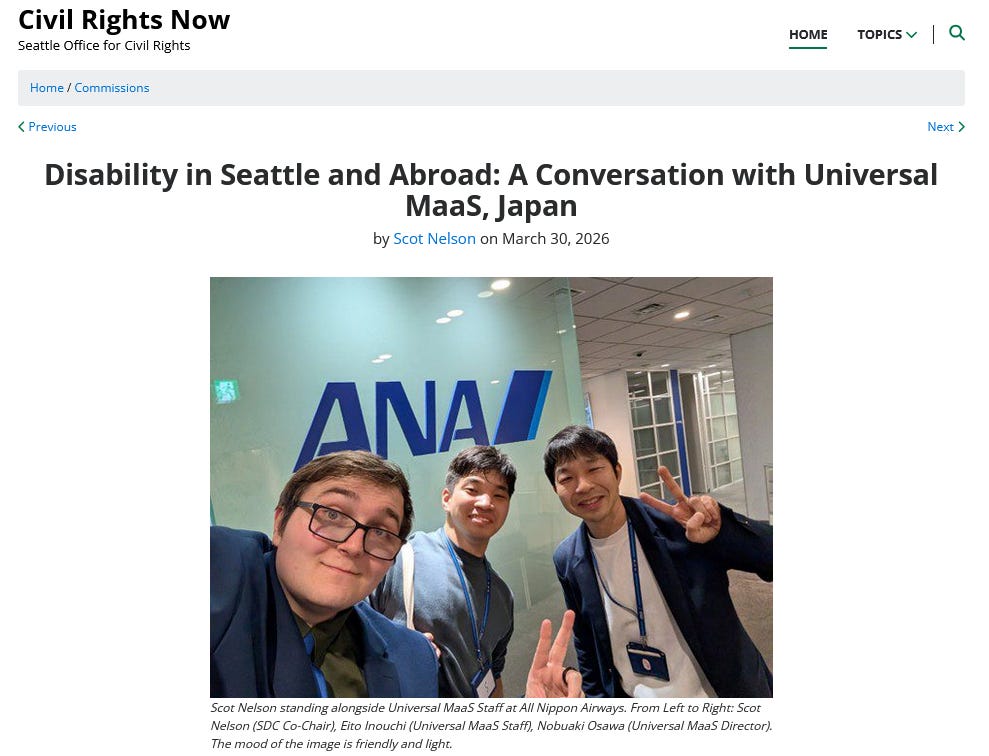
In addition, a few pieces have been published regarding my travels (in terms of Disability work and Parks and Recreation work looking into Festivals) here:

Finally, if you haven’t gotten the chance, please check out OCR’s yearly presentation about its four supported commissions at Seattle City Council on the Seattle Channel here: The presentation begins at 46:43:00!
New Favorite Sources
https://mrsc.org/getmedia/1c25ae05-968c-4edd-8039-af0cf958baa7/Closest-Governments-To-The-People.pdf?ext=.pdf While this is not technically a “New” Favorite Source, as I have linked to it in the first article written on the Lanyard Board, I want to give some space for this document. It’s called The Closest Government To The People, and it is a behemoth-sized 1,244 page PDF by Steve Lundin and edited by the Division of Governmental Studies and Services at WSU which has primer or in-depth level information about ALL of the local governments in Washington State. If you are curious about how any of the overlapping government boundaries work, or what the heck a charter city is, I can recommend no greater a resource.
New Resources
This section will provide links to resources such as infographics that have been produced in the past week that are useful for understanding, mapping or working with City of Seattle or Comparative Analysis stuff, broadly.
Resource: Vietnamese Local Government Levels Pre-2025 and Post-2025

Resource visualizing the changes in local government structure from pre-2025 reforms to post-2025 reforms, to help orient what a massive change has occurred in how our Sister City, Haiphong has been reorganized.
Introduction to Org Structure: Comparison, Part I
In past articles, we have gone over the general structure of the City of Seattle. There are Branches, Departments, Offices, Divisions and Units that make up the organizational structure of the City of Seattle, and there are overlapping districts and jurisdictions that allow other bodies to “share space” with the City of Seattle.
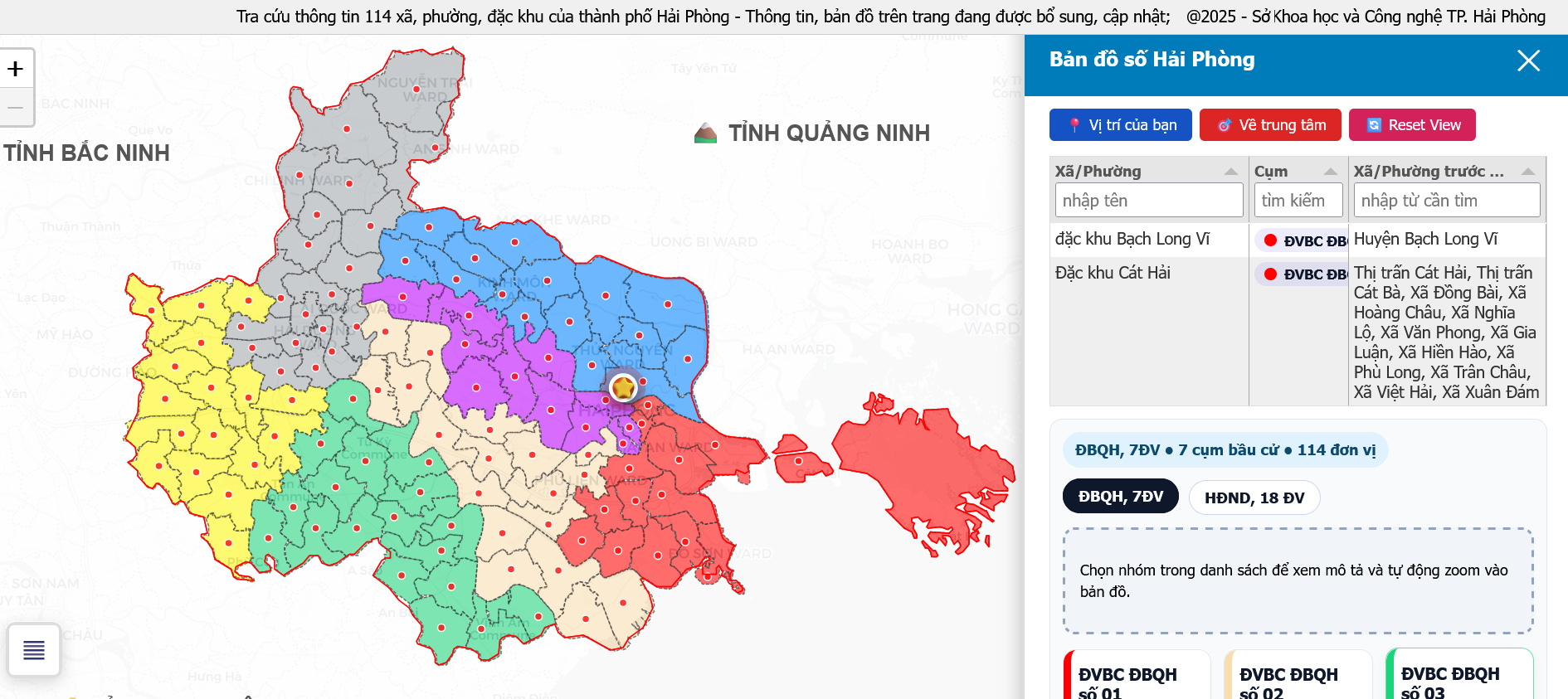
In Vietnam, and in Haiphong, this is also the case, but the tier of government that Haiphong represents is a step higher than what we think about when we think of Seattle. Underneath “The City of Haiphong” are 114 Wards, Communes and Special Zones that each have their own legislative and executive apparatuses.
There are significant challenges with comparing Seattle and Haiphong, as a result - in some ways, it would be better to compare Haiphong to an entire state in the United States, or to compare Seattle to a ward in Haiphong. Where these approaches may struggle, however, is that the “City” level in both “The City of Haiphong” and “The City of Seattle” create a functional and identity-based grouping that ties individuals who work and live in an urban environment together.
To some extent, there is also an evolutionary trajectory that should be tracked as municipal bodies that grow beyond a certain point. Even the City of Seattle has changed its form of government over time, having changed to a model of having legislative districts in 2013, and having had multiple Charters over the course of its history.
Vietnam takes a very structured approach to organizing governmental units based on their population characteristics, explicitly designating the qualities that differentiate a “Province” from a “Centrally Governed City”, and a “Commune” from a “Ward” in the law. In these same laws, there are provisions for the reclassification of geographic areas based on the changing characteristics of the population - as cities grow, for example, they may reach the point where more of their sub-units are “Wards”.
Some of the structures that Vietnamese cities take on can be analyzed to understand how service delivery and analogous functions are accomplished through the mechanism of “regionalizing” functions and their governance and oversight. What are the benefits or disadvantages to approaching service delivery in “smaller chunks”? What are the characteristics of budget, legislation and staffing that flow from the distinction between ‘central governance’ and ‘regional governance nodes’?
To get at some of these questions, we’ll be looking to compare the structures of the Cities of Haiphong and Seattle. There are many factors which influence service outcomes and municipal governance, not the least of which relating to other government bodies that have legal primacy, such as the Federal government in the US or the National government of Vietnam. My analysis does not draw confounding conclusions, but instead invites further experimentation and research to identify which factors that lead to proper service delivery are attributable to internal structure, and which are attributable to external factors.
Legislative Composition:
One of the categories I will be looking at when comparing Haiphong and Seattle will be the Legislative Composition of both cities. Both cities have separate administrative/executive and legislative bodies, and both cities pass ordinances as conditions change that require new or updated laws.
The purpose of looking at these compositions will be to determine the broad patterns of what subject areas are changed and legislated more often, and when these changes occur.
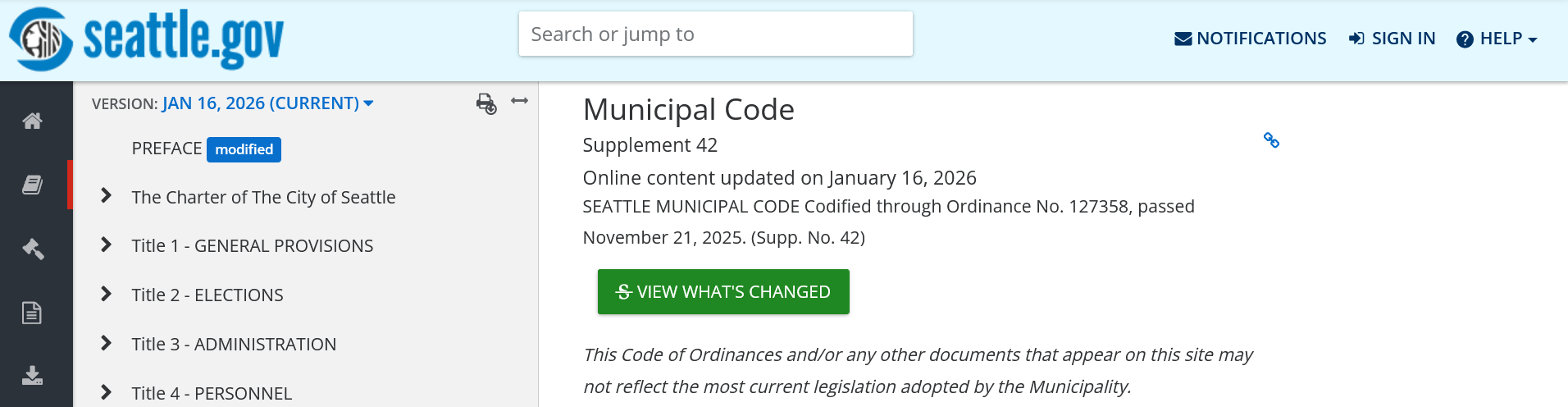
For Seattle, the major source that will be consulted is the Seattle Municipal Code: https://library.municode.com/wa/seattle/codes/municipal_code
The Seattle Municipal Code can be exported into an Excel Table format, and instances of changes made to the code can be identified through ordinances cited. As a result, the secondary source will be the Ordinances themselves: http://clerk.seattle.gov/search/ordinances/
For Haiphong, the major primary source will be the Haiphong Website’s document database for legal documents: https://haiphong.gov.vn/?pageid=27205&p_cate=41838
The secondary source, which I will use the above primary source to check against will be a more thoroughly systematized database for legal documents (Nation-wide) which includes documents promulgated by the City of Haiphong: https://thuvienphapluat.vn/en/index.aspx
Neighborhoods:
To understand the characteristics of neighborhoods, or of lower-tier units in the Cities of Haiphong and Seattle, I will be looking at the municipal bodies that exist at the lower-tier in Haiphong. For Seattle, I will be looking at how the City of Seattle defines its populations by Neighborhood and Community, and then looking at civic organs that attach themselves to Neighborhoods.
For Seattle, I will use the Seattle Community Reporting Areas data to analyze geographically bounded areas: https://data-seattlecitygis.opendata.arcgis.com/datasets/SeattleCityGIS::community-reporting-areas-3/about
I will also reference City of Seattle planning documents regarding Urban Centers and Villages: https://seattlecitygis.maps.arcgis.com/home/item.html?id=61fbadcc0b5247ec8b5c2fad0fe329e1
For Civic Organs, I have identified a non-exhaustive list of organizations that act in a capacity that provides democratic input to matters of planning or community organization:
Advisory Councils (Handled by Seattle ARC)
Community Councils
For Haiphong, I will be relying largely on the map of Haiphong which contains information updated by the City of Haiphong, which can be found here: https://bandoso.haiphong.gov.vn/daibieuqh/
I will also rely on the planning documents found on the City of Haiphong’s website, as well as information from all 114 websites dedicated to the Communes, Wards and Special Zones of the City of Haiphong.
Service Delivery Metrics:
Service Delivery metrics will be developed and analyzed as I gain more context, and include metrics around road infrastructure, electricity and public utilities.
Much of this data will come from Seattle through its Open Data Portal: https://data.seattle.gov/
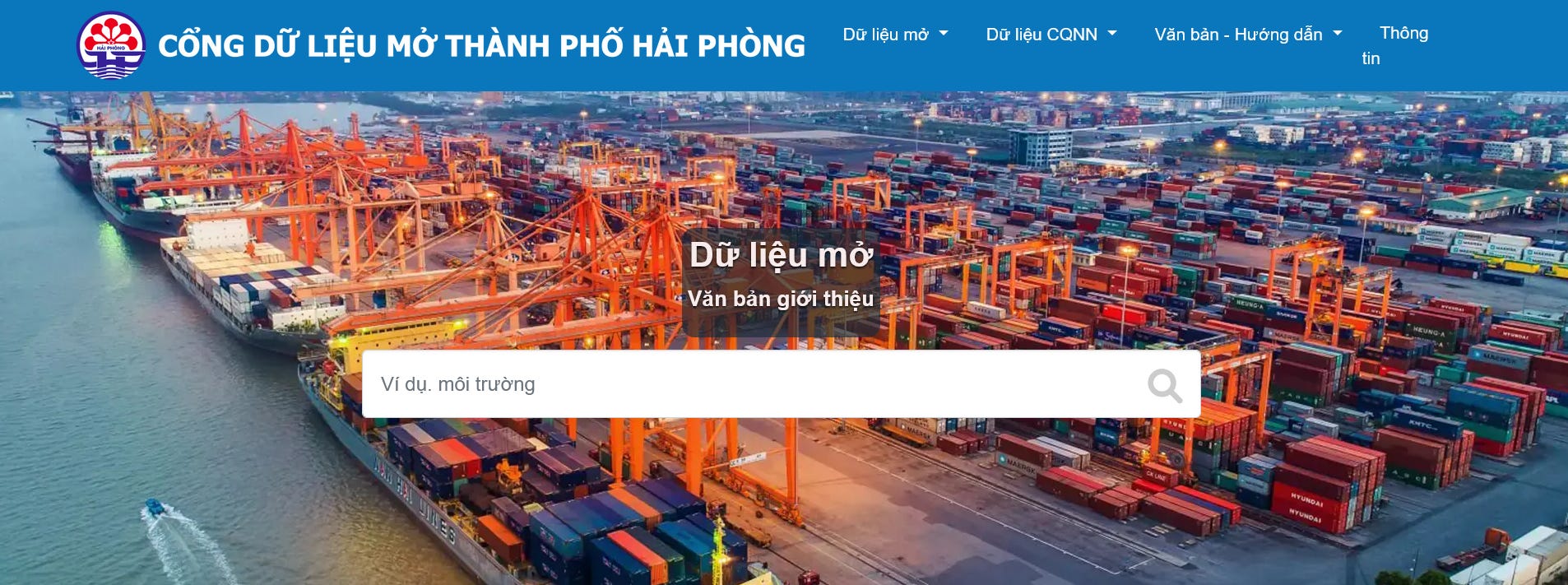
Much of this data will come from Haiphong through its Open Data Portal: http://data.haiphong.gov.vn/

Structural Mapping:
Some structural maps of how the Cities of Seattle and Haiphong are put together can be synthesized through legal documents, which will come from the above sources. There are, however, many variations on structure that are caused by discretion - they aren’t laid out in the law, but are instead determined by budget line-items and discretionary decisions of leadership in a given city office.
For Seattle, in addition to what has been identified above for its laws, there is an Open Budget portal which contains budgetary information that can be drilled down for structural information to synthesize into charts: https://openbudget.seattle.gov/
For Haiphong, budgetary information is still being identified, with this being where authoritative information is published: https://sotc.haiphong.gov.vn/category/tiep-can-thong-tin/cong-khai-ngan-sach/
Surveys will also be introduced at a later stage in the project, with more on that later.
Conclusion
The current methodology is showing promise as far as systematically identifying like information between both cities that can be meaningfully analyzed. By identifying legislative, material and organizational similarities and the outcomes for public service, the project is likely to uncover some patterns that could lead to improving public service outcomes.
The next steps will involve a lot more tables, charts and diagrams synthesized from the data sources I’ve referenced above!
The best way to keep up with further conversations is to be a subscriber to The Lanyard Board, and to check out The Lanyard Board on social media.
The Lanyard Board is supported by readers like yourself. If you can, please support the project on Ko-Fi and tip the suggested amount of $2 for every month you feel a spark of enjoyment, insight or curiosity from The Lanyard Board.
Thanks for reading The Lanyard Board! Subscribe for free to receive new posts and support my work.